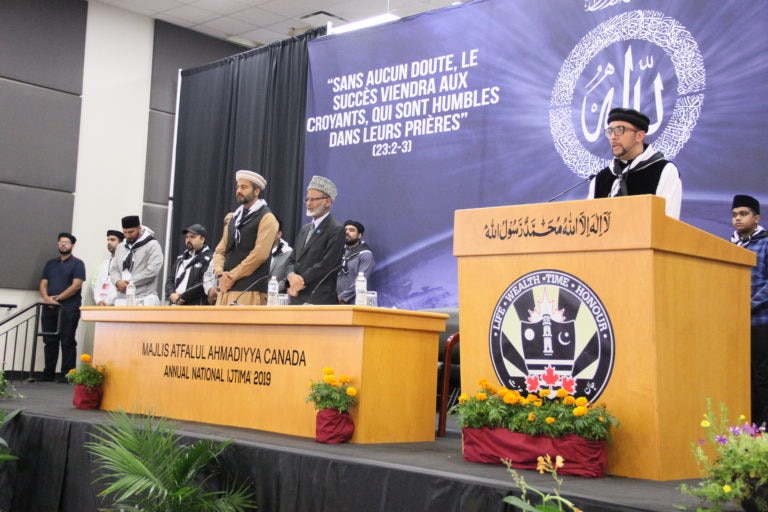
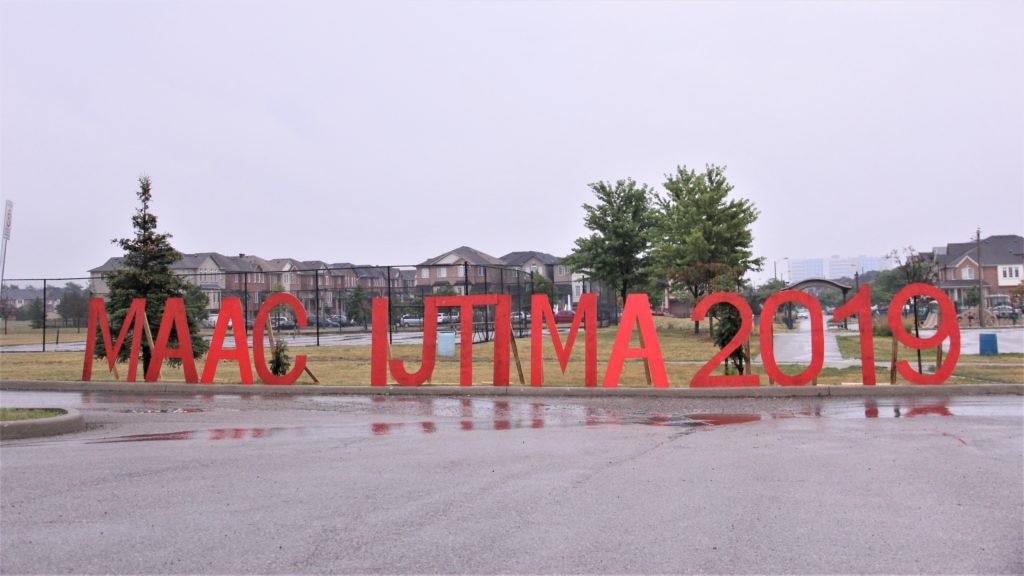
The 32nd
Annual Ijtema of Majlis Atfal-ul-Ahmadiyya Canada was held in
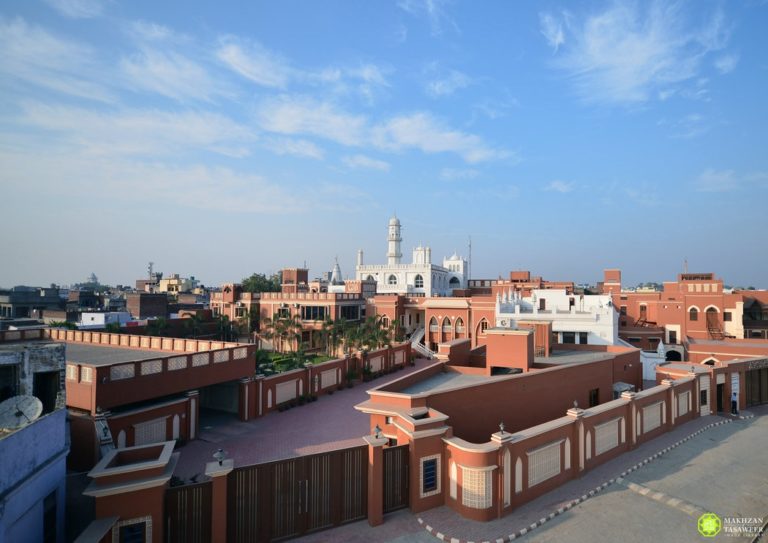
Aiwan-e-Tahir during the weekend on 17 and 18 August 2019.
Over the last few years, this Ijtema was
held at Hadiqa-e-Ahmad in Bradford. Now, for safety and organisational
convenience, this year, the Ijtema was moved to Aiwan-e-Tahir located in the
Baitul Islam Mosque complex, Toronto.
Registration started at 8:30am with a long
line up of Atfal coming from all over Canada.
National Amir Canada, Lal Khan Malik Sahib
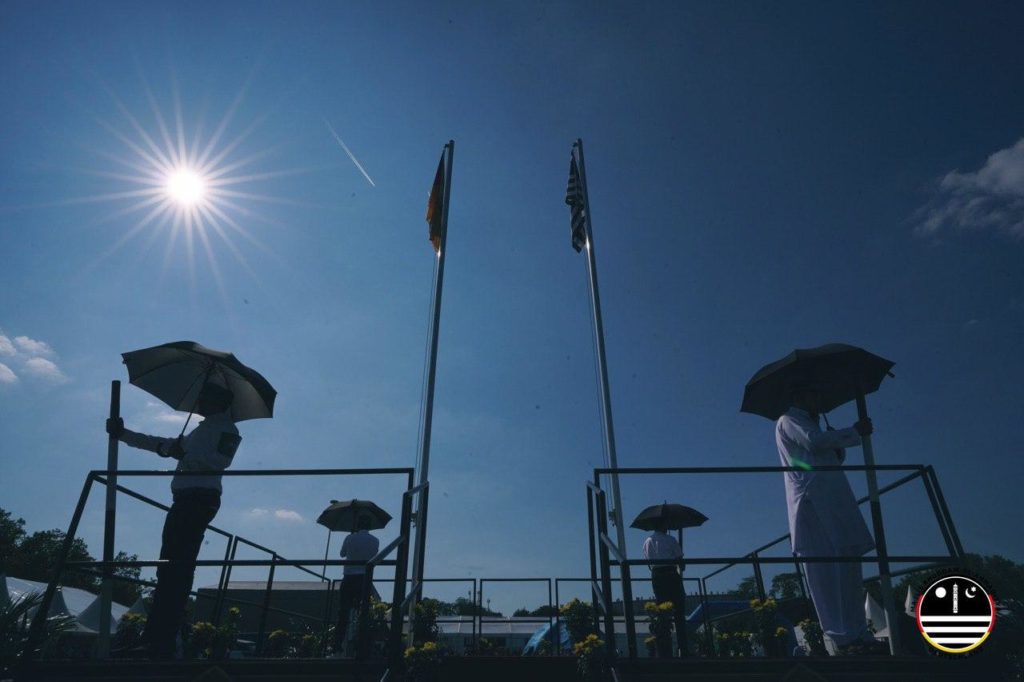
formally inaugurated the Ijtema with the flag hoisting ceremony. This was followed by the opening session
which started at 10am. Salat was the
theme of Ijtema this year. With
permission of Hazrat Khalifatul Masihaa, for the first time, Atfal
Ijtema proceedings were transmitted live for parents and members of the Canada
Jamaat.
The main hall of Aiwan-e-Tahir was filled
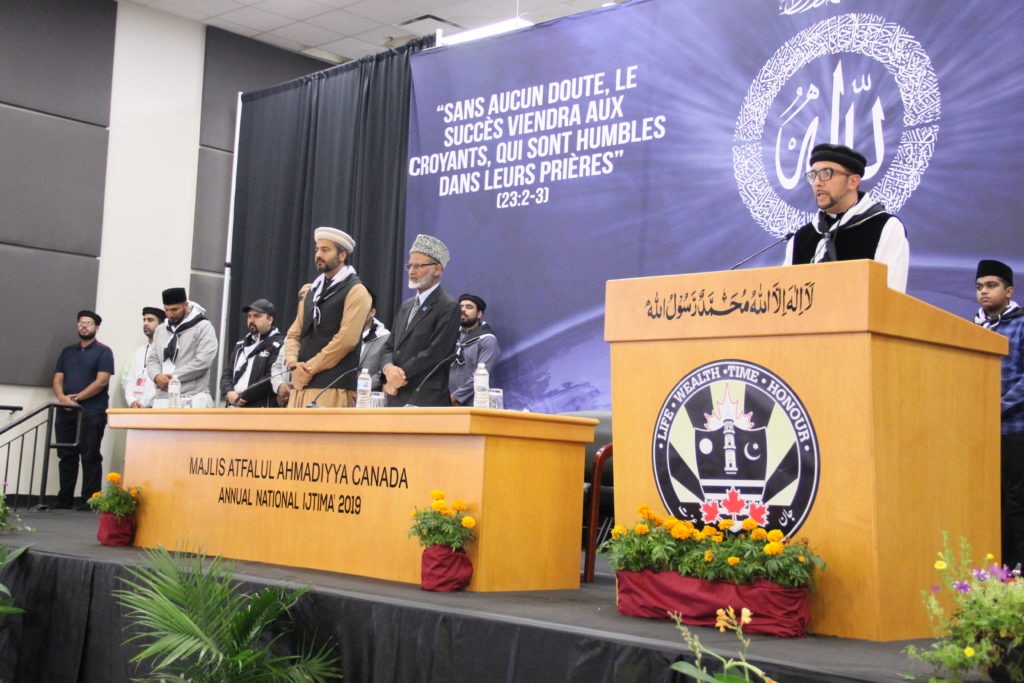
with Atfal. The opening session started
with the recitation of the Holy Quran followed by the Atfal pledge led by
Mohtamim Atfal, Ayaz Warraich Sahib.
Next, a poem was presented by Khaqan Kamal Sahib with translation
by Fateh Imran Sahib.
Amir Sahib delivered an inspiring opening
address regarding the importance of Salat.
Amir Sahib continued the programme with the presentation of academic
achievement awards to Atfal. He also
acknowledged new Atfal who joined the Majlis Atfal-ul-Ahmadiyya this year.
The next programme item was the exciting
academic and sports competitions for both age groups, ma‘yar-e-kabir
(12-15 years old) and ma‘yar-e-saghir (7-11 years old), with designated
areas for each. These fun events continued until lunch time.
Even more events were organised for Atfal
to engage in. These included an obstacle course, Zorbing, sumo wrestling and a
gladiator joust. An exhibition &
Atfal Hub was also running during the Ijtema,
except during prayer times and session times.
Zuhr and Asr prayers were combined and
offered at Baitul Islam mosque. Various competitions continued after prayers
until dinner time.
In early evening, Maghrib and Isha prayers
were offered, and a very interesting question & answer session was held for
each age group. Both groups of Atfal
were treated to an enjoyable science and magic show just before bed time on day
1 of the Ijtema.
Day 2 of the Ijtema started in the early
hours of the summer morning with Tahajud and Fajr prayers with about 400 Atfal
in the mosque. This was followed by
dars-ul-Quran and individual recitation of the Holy Quran.
The academic and sports competitions final
events were held in the morning. The academic competitions included tilawat,
nazm, Urdu, English and French speeches as well as Azan and Hifz-e-Quran. These
competitions were wrapped up by lunch time for all Atfal. The closing session
of this year’s Ijtema began after Zuhr and Asr prayers in the mosque.
Principal Jamia Ahmadiyya Canada, Daud
Ahmad Hanif Sahib was the chief guest for the closing session and awarded
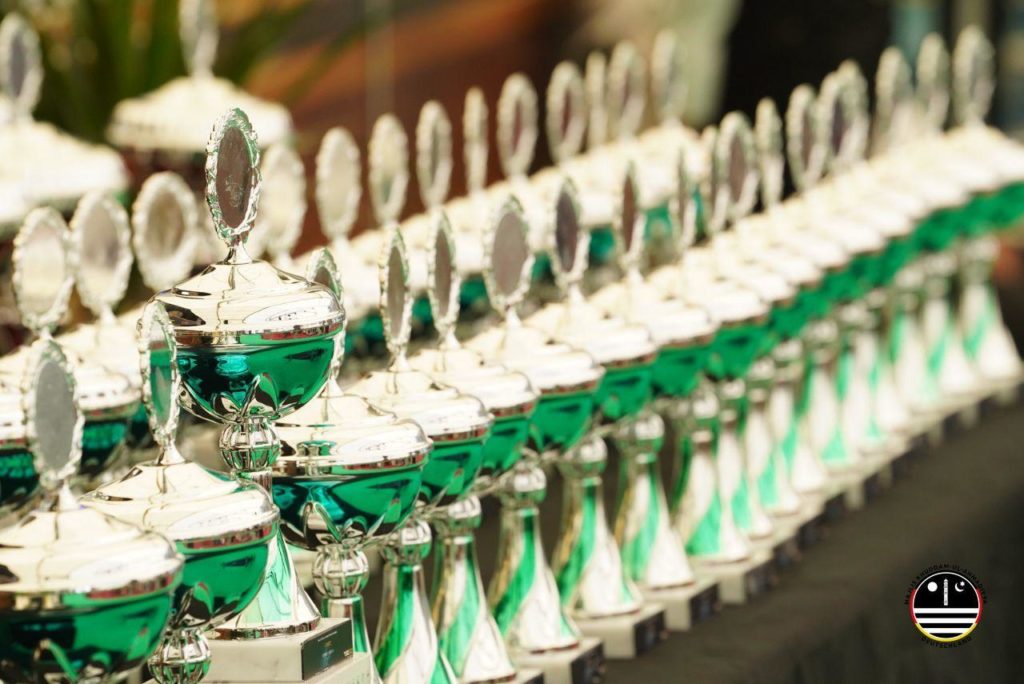
prizes to the position holders of the academic competitions.
Nazim-e-Ala Ijtema, Ayaz Warraich Sahib
presented the final report of the 32nd National Atfal
Ijtema. This was followed by the
concluding address by Sadr Majlis Khuddam-ul-Ahmadiyya Canada, Zubair Afzal
Sahib.
Thus, the 32nd National Ijtema
of Majlis Atfal-ul-Ahmadiyya Canada came to a successful end.
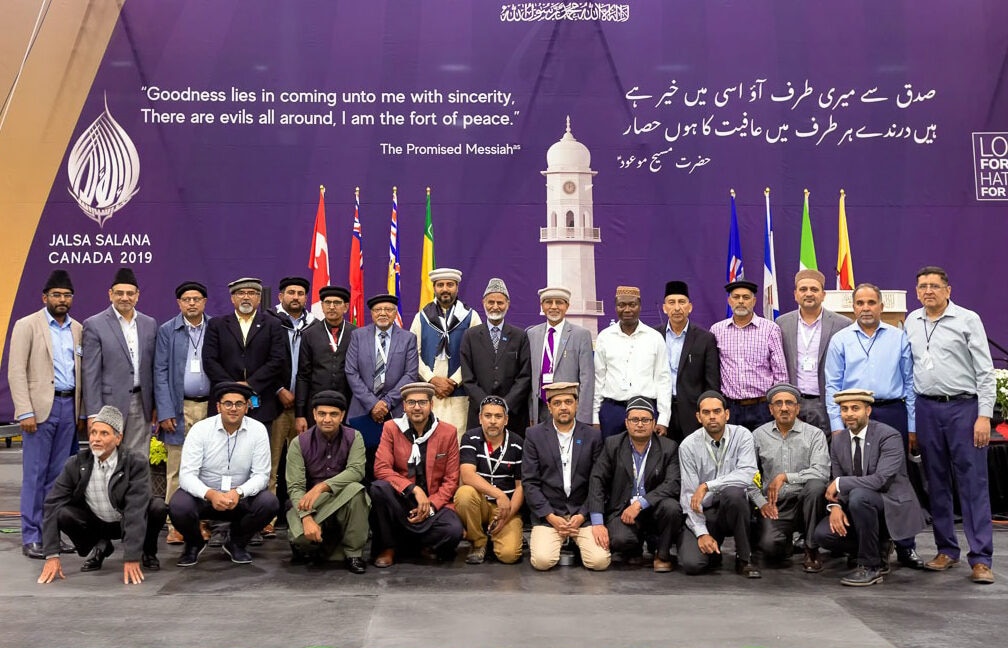
There
was a memorable group photo of all participating Atfal. Many Atfal delivered loud and emotional
slogans at the conclusion of the Ijtema.
The total attendance for this year’s Ijtema was 1,278 Atfal,
representing 12 of the 14 regions across Canada. This represented an increase of 259 Atfal and
a 26% increase from last year. Calgary
region Atfal received a special award for travelling 3,362 kilometers to attend
the Ijtema, the farthest distance travelled to attend Ijtimā. In addition to Atfal, 150 guests also
attended.
Hazrat Abu Huraira, Allah be pleased with him, narrates that the Holy Prophet, peace and blessings of Allah be upon him, said:
“Religion is very easy. Whoever overburdens himself in his religion will not be able to continue in that way. So you should not be extremists, but try to be near to perfection and receive the good tidings that you will be rewarded; and gain strength by worshipping in the mornings, the afternoons and during the last hours of the nights.”
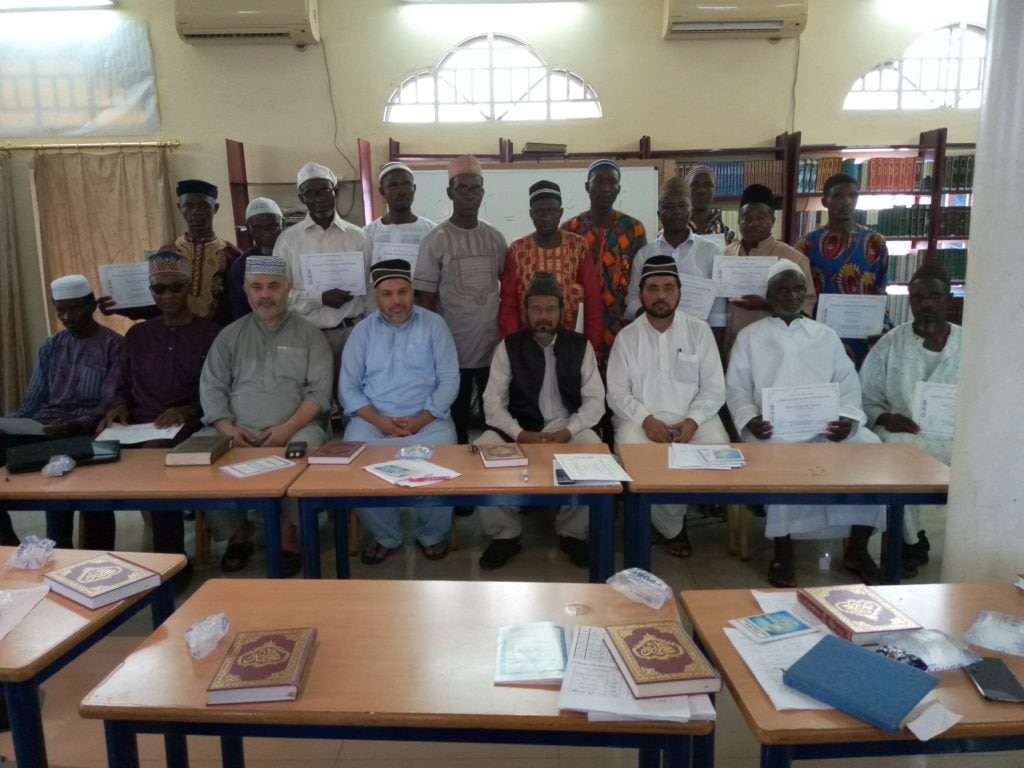
The department of talim-ul-Quran in Majlis
Ansarullah Sierra Leone organised a Quran teaching training class on 24 and 25
August. 13 Talim-ul-Quran secretaries from different regions attended the
class.
The class began with the recitation of the
Holy Quran. Imam Tahir Ahmad Farrukh Sahib addressed the participants on the
importance of learning and teaching of the Holy Quran. He also discussed the
importance of the Holy Quran’s recitation, with references from the Holy Quran,
sayings of the Holy Prophetsa, excerpts from the writings of the
Promised Messiahas and sayings of the Khulafa of Ahmadiyyat.
A lecture on tajweed (rules of
Quran recitation) was delivered by Imam Hafiz Asadullah Sahib. He explained
some verses of the Holy Quran with their proper pronunciation and explained the
various rules of recitation so that the teachers may not only learn how to
recite the Holy Quran properly but also teach others as well.
Naseer Ahmad Qureshi Sahib taught basic
Arabic grammar.
Apart from the teachings of the Holy
Quran, emphasis was also given on the translation of Salat. Imam Muhammad Naeem
Azhar Sahib taught Salat with English translation.
On the second day of the class, a test was
taken of all the participants of the class. Alhamdolillah, all participants
showed great interest in the class and learnt a lot in the two days.
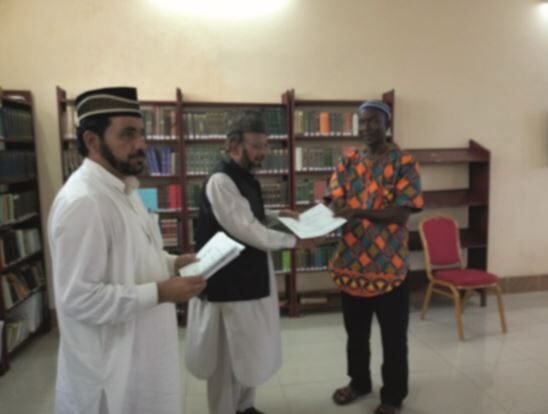
Saeed-ur-Rahman Sahib, Amir and
Missionary-in-Charge delivered the concluding address and distributed
certificates to participants.
May
Allah the Almighty enable all of us to recite the Holy Quran and enable us to
practice the true teachings of the Quran. Amin.
The Economist (27 August 2019, “Everywhere in Chains”) ran a story on the concept of slavery in Islam, referring specially to a new book by Jonathan Brown titled Slavery and Islam. A whole array of arguments has been included in the analysis, both for and against Islam.
Since the issue of slavery has popped up, we thought it is essential that Al Hakam came forward and presented the true Islamic viewpoint on this very important issue, before all guns are pointed towards Islam.
What ought not to be forgotten is that slavery is not something introduced by Islam. It is something that existed since pre-historic times and was a by-product of wars and conflicts between clans and tribes, evolving later into an international phenomenon. Of the numerous vices that Islam took upon itself to cleanse the human society of, slavery was one of them.
Wars were very common even before Islam and so was taking prisoners of war into slavery. Wars continued to break out during the time of the Prophetsa of Islam and prisoners of war had to be held as part of establishing peace; holding the mischievous from creating unrest and waging wars.
Now, the question here is this: What did Islam do regarding the vicious business of slavery? This discussion can go on forever, but here, we can only suffice by saying that the Prophetsa of Islam turned this lawless business into a system and further worked on how the system could finally be abolished. In a world where a slave was no more than a commodity, much like cattle and other domesticised animals, the Holy Prophetsa of Islam gave laws to ensure that slaves were, to start with, taken as human beings who had feelings, emotions and other humanly desires that needed to be looked after.
Surah al-Balad (chapter 90) is one of the chapters of the Holy Quran revealed to the Holy Prophetsa in the early days of being commissioned for prophethood. Verses 11 to 14 of this chapter clearly state that a society cannot progress unless slaves are freed.
“And We showed him two ascending paths of nobility. But he did not follow the path of ‘Aqabah’. And what should make you know what the ‘Aqabah’ is? [It is] the freeing of a slave.”
One can ask that if he had received this commandment in the early days of his mission, why did the Holy Prophetsa of Islam not free all slaves immediately? This question will have to be replied with a question.
The majority of those who were held slaves were prisoners of wars and they were in great numbers. As prisoners of war, it was essential to see what background they were from; why they had partaken in war; whether they still had in their hearts the want to take up arms and create unrest and whether they had committed – what we call in the so-called modern day by the so-called modern man – crimes against humanity.
In a society that literally endorsed the saying, “All is fair in love and war”, the prisoners of war could possibly have practiced the notion in an inhumanely fashion by killing children and raping women. Would it have been a reasonable move to set them free to go back into society? Would society have remained safe with such persons lurking the streets? Of course not! Modern day prisons tend not to set a convicted felon free unless it is clearly established that they do not pose a threat to the safety and security of civilians. This is a very reasonable approach. And it was the same approach that was adopted by the Holy Prophetsa of Islam 14 centuries ago.
As long as there were slaves in the custody of Muslims, they were given safety, security and, above all, the opportunity to reform themselves. Slaves got a homely atmosphere through living with Muslim families, developed civic sense and, at the appropriate time, were freed to integrate with the general society. While they lived as slaves, they were treated by Muslim families in accordance with the Quranic injunction of Surah al-Nisa (verse 37) where believers are commanded to be kind to those enslaved under inevitable circumstances; grouped in this instruction to be kind and affectionate with are parents, relatives and slaves.
Verse 222 of Surah al-Baqarah encourages the marriage of free Muslims (or masters) and their slaves. Not only is the general Muslim public encouraged to show respect to slaves through lawfully marrying them, the Holy Prophetsa himself is instructed by Allah not to marry more than the women he had already married, unless it was for the safety and security of a slave woman. (Surah al Ahzab, Ch.33: V.53)
Sahih Muslim has recorded a hadith where Hazrat Abu Masudra is reported to have said that he was angry at one of his slaves and physically disciplined him. The Holy Prophetsa approached him and said, “Abu Masud, do not forget that there is a God above you Who has more power over you than you have over His slave.”
Abu Masud, terrified by this reminder and the presence of the Holy Prophetsa, immediately announced that he had freed that slave. The Holy Prophetsa, endorsing this act, said, “Had you not done so, you would have burnt in the fire of hell.”
All this was a gradual progression of Islam towards finally abolishing slavery. Since we are addressing the allegations of modern man on Islam, we wish to remind everyone here of a process called “weaning out”. The weaning-out approach is used in medical, social and economic situations where there is dependence on a certain harmful element and the body or society has to be freed of that dependence. So, Islam gradually moved the society that was so badly dependent on slavery towards one that was free of all forms of slavery.
Then came a time when, under divine instruction, the Holy Prophetsa abolished all forms of slavery. The details of how the weaning out process unfolded are long. However, it is unjust to accuse Islam of promoting slavery when it actually strove to abolish it through very reasonable, rational and practicable ways.
Hazrat Mirza Masroor Ahmad, Khalifatul Masih Vaa – the worldwide head of the Ahmadiyya Muslim Jamaat – has very eloquently spoken on how Islam views slavery and has also called world leaders to understand slavery in its most modern meaning and derivatives.
For example, speaking to the Pan African Ahmadiyya Muslim Association on 23 November 2013, he said:
“Based upon Islam’s true teachings, we [Ahmadi Muslims] strive and work towards the achievement of universal independence and self-determination, with the ambition that every single person in the world is able to live autonomously. All people should have fundamental freedoms, such as religious, political, national and civil freedom.
“The powerful nations take advantage of the weaker nations and dictate their own preferred policies and so, in this way, they have practically enslaved the developing countries. Sadly, the major powers take benefit and advantage of the natural resources of the poorer nations and do not give what is the due right of the weaker nations in return.”
Through these lines, we invite our readers to send any questions they may have regarding Islam and slavery; we will be happy to reply to them.
“Master Abdul Rahim Nayyar Sahib is a proficient literary person and a skilled writer. He had promised before departing for the UK that he would continue to send accounts of his journey of Qadian to London in writing on a regular basis. Sadly, owing to poor health, during the course of the journey, he was not able to do that and sent only a single article.
“This should be considered the preface of his travelogue and meanwhile, [we] shall await the detailed accounts. Hopefully, now that he has reached the UK, he will be able to complete this article with comfort.
“Below is the article sent by him:” (Editor Al Fazl, 23 August 1919)
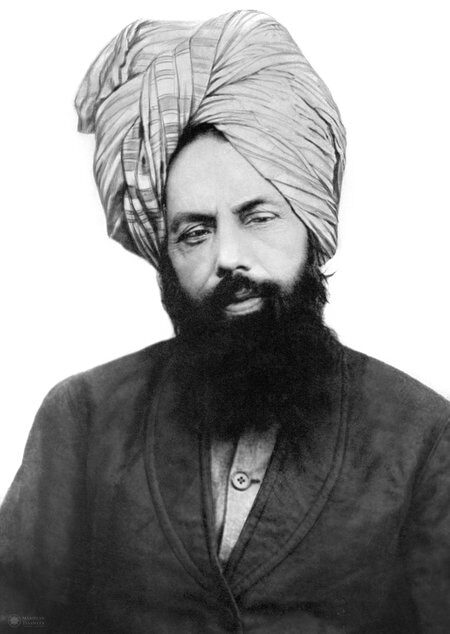
Hazrat Maulvi Abdur Rahim Nayyarra
15 July 1919: I am extremely joyful over my good fortune. I recall the bounties of my Lord and today, looking at the practical fulfilment of a long-held desire and pure yearning of my heart, I say happily:
للہ الحمد ہر آں چیز کہ خاطر می خواست
آخر آمد زپس پردۂ تقدیر پدید
[All praise belongs to Allah that everything He desires to be done, it finally came to pass through divine authority.]
Today, those things that were once dreams and those ambitions that were mere thoughts are materialising through the pure appearance of the Messiahas and the special attention of Fazl-e-Umar [Hazrat Khalifatul Masih IIra]. Glory be to God! Limitless peace be upon Muhammadsa of Arabia! May blessings shower upon Ahmadas of Qadian!
The unknown Abdul Rahim departs for the propagation of Islam as a Nayyar [star] of Ahmadiyyat. My heart possesses a series of thoughts. The map of my life is in front of my eyes. I am a living example of resurrection of the dead:
مِرادم معجزہ ہے انکے دم ان کی توجہ کا
میں زندہ ہوں اگرچہ قصہ لازرہے افسانہ
[My life is a miracle of his spirit and attention. Although, the tale of Lazarus (of Bethany) remains a legend, I am alive in reality.]
I was a child when I saw the carriage of the Holy Prophetsa in a dream and I touched the blessed feet of the chief of the universe. My mother interpreted the dream, “My son, you will become a scholar when you come of age or you will happen to find the Imam Mahdi.”
Praise belongs to my Lord that I came across the carriage of Allah’s Prophet Muhammadsa and I embraced his feet and became the servant of the Mahdi. When I was extremely sick and doctors were hopeless about my life, I wrote to God’s Messiah, “Huzoor, pray for me as you did [with the prayer that you carried out] for Abdul Rahim, son of Nawab Sahib. My heart desires to witness the victory of Huzoor.”
In reply, Hazrat Jariyullah [the Promised Messiahas] stated, “I have prayed. Keep me informed about your health.”
Exalted is Allah Almighty with all His glory for I regained health. I am alive in the age of the Promised Son [Hazrat Musleh-e-Maudra] to witness the triumphs of the blessed Messiah. Once, Dr Syed Muhammad Hussain Shah Sahib and Dr Mirza Yaqub Baig Sahib were present before Hazrat Khalifatul Masih Ira and the topics under discussion were the lack of courage of Maulvi Muhammad Ali Sahib and the appointment of a missionary to England. Hazrat Khalifa Ira was expressing, “He [Maulvi Muhammad Ali Sahib] is not a very courageous person.” (Perhaps his name was being discussed as a missionary to England). Both doctors said, “Huzoor, even Khawaja Kamaludin Sahib has become brave after reaching there.”
Meanwhile, this humble one said “Assalamo alaikum” before Hazrat Khalifatul Masih. Hazrat Khalifatul Masih Ira graciously provided me a seat and asked, “Shall we send you to England?”
It was not the time for me to travel so I abruptly responded, “Huzoor, they [pointing towards the doctors] are men of high ranks. I am a simple person. What could I possibly achieve?”
Huzoorra replied, “Tasks are in fact achieved by men of simple natures.”
All praise belongs to Allah that the [chosen] one appeared, who is elevating the status of simple men to high ranks, and the words uttered by the mouth of revered Nuruddinra became true today:
ایں سعادت چو بود قسمت ما
رفتہ رفتہ رسید نوبت ما
[As this good fortune was written to be my destiny, my destination is becoming nearer each moment.]
اللھم صل علی محمد وعلی الہ و اصحابہ وعلی عبدک المسیح الموعود
[O Allah, bless Muhammad, his followers, his companions and Your servant, the Promised Messiah.]
At the time of departure, the coming out of Hazrat Khalifatul Masih [IIra], along with the revered members of Qadian Jamaat, on the road to say farewell and the taking of the Half-e-Ita‘at [oath of obedience] by Huzoorra from his servants whilst walking and also praying for them is an honour that only Allah, by His sheer grace, can grant to an utterly incompetent person like me.
ہے عجب میرے خدا میرے پہ احساں تیرا
کس قدر شکر کروں اے مِرے سلطاں تیرا
[My Lord, Your ways of showering bounties upon me are astounding. How grateful should I be to You, O my King?]
A series of thoughts, which revolved around the remembrance of Allah’s blessings, honour given by Hazrat Khalifa IIra to this humble servant, slight thoughts of my ailing wife and my day-old son, lingered till Batala. When I looked at my watch, it appeared that I was late, but the God of this Messiahas caused the train to stand past the scheduled time and we had plenty of time to complete our preparation before boarding the train.
Brother Sheikh Fazl Haq Sahib accompanied the servants of Hazrat Fazle-Umar from Batala to Amritsar in order to remind everyone of the fresh blessings and grace of Allah that was descending upon us. Fazl Haq Sahib remained with me personally until I had sat on the Bombay Mail train (the donkey of the Dajjal – Antichrist) and I had parted from the people in Amritsar with the train’s sudden motion. May Allah reward him the best of rewards.
At the Amritsar Railway Station, Ataullah Sahib, son of respected Dr Karam Ilahi Sahib, and Babu Faqir Ali Sahib, on behalf of Amritsar Jamaat, welcomed us and showed hospitality to this servant of Mahmud[ra].
Babu Sahib said, “It is an interesting coincidence that when Mufti Muhammad Sadiq Sahib was travelling to the UK, I was on duty to signal the train driver that the track was clear to go and today, I am also scheduled to offer this duty.”
I considered this as a very good omen and prayed to God Almighty that He grants progress to Jamaat-e-Ahmadiyya Amritsar. Although we embarked on the train, the second-class compartment was overcrowded to the extent that we had to travel while standing for a long time. It is quite a surprise that three young men are on the same train who are on their way to London. Two of them are Hindu by faith and the third one is a Muslim. Hence, our mission of tabligh in the UK has begun from them.
The 37th Jalsa Salana Western Canada 2019 concluded in Calgary, amidst countless blessings of Allah the Almighty.
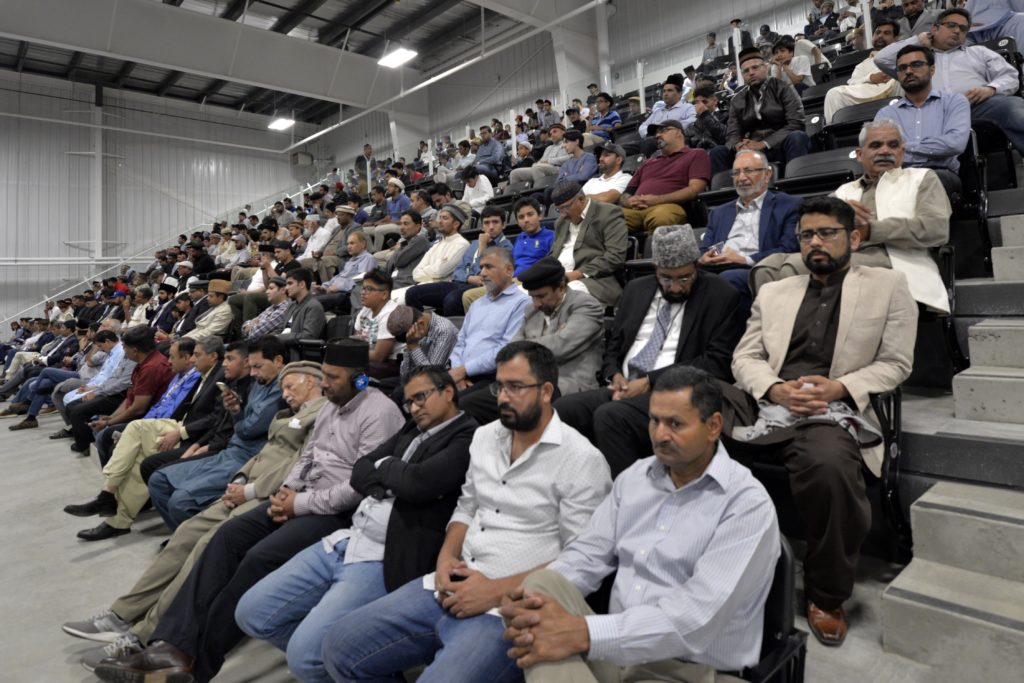
This year, Jalsa Salana for Western Canada was held on 24-25 August 2019 in Calgary. The Jalsa was attended by 3,255 Jamaat members and invited guests. Delegates from all the four provinces of Western Canada (British Columbia, Alberta, Saskatchewan and Manitoba) were in attendance.
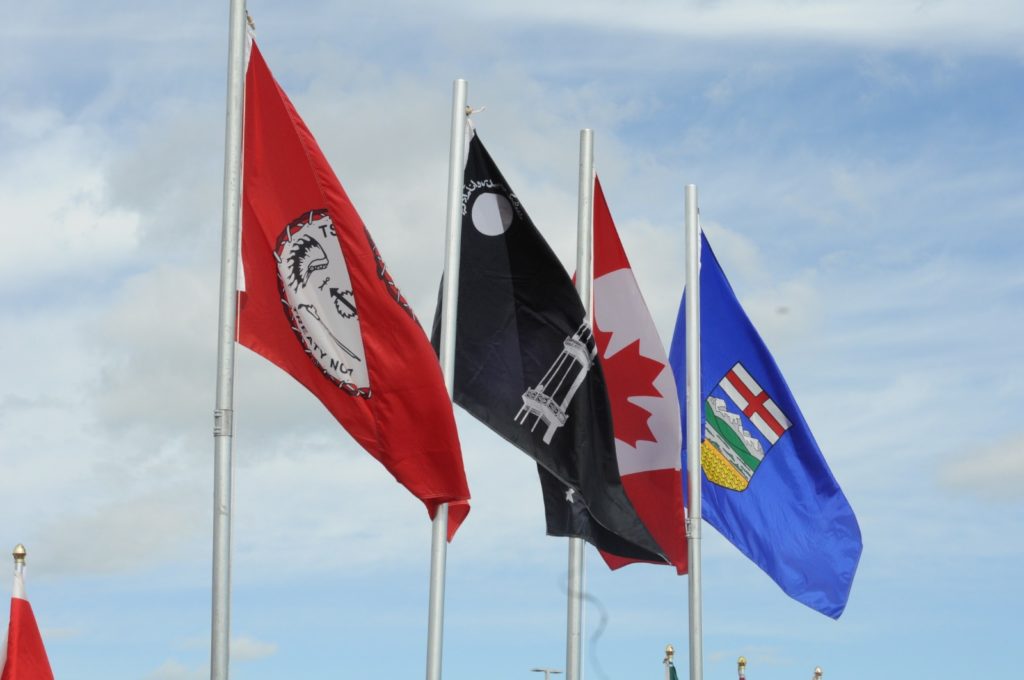
In fulfillment of the desire of our beloved Imam, Hazrat Khalifatul Masih V, may Allah be his Helper, to reach out to First Nations of Canada and build long-term relationships, this year’s Jalsa was held on the traditional lands of Tsuut’ina First Nation near Calgary.
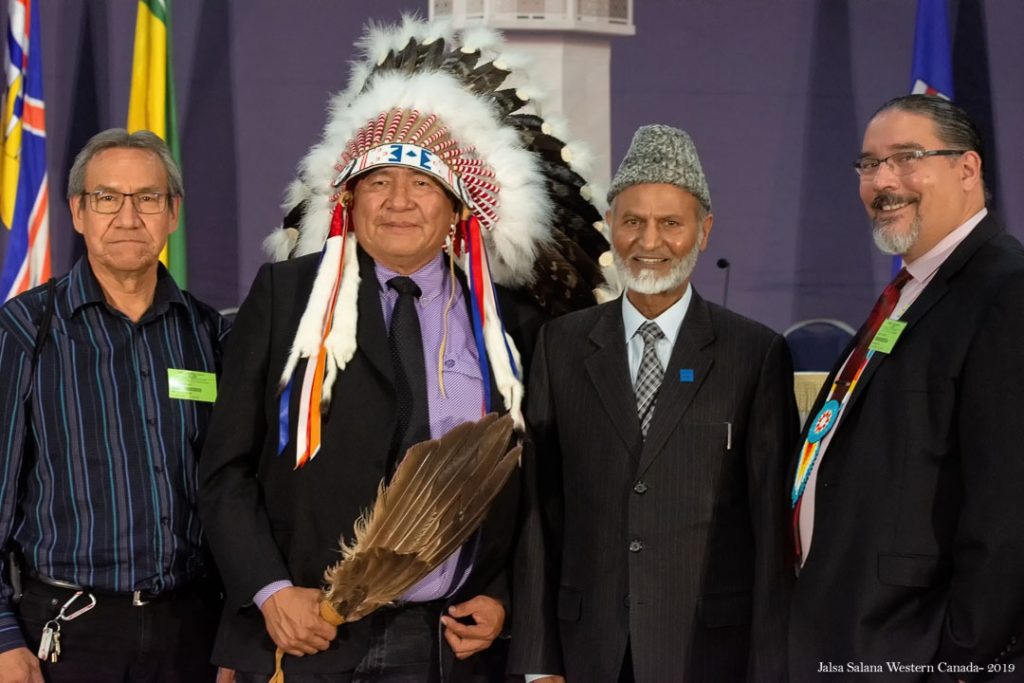
In addition to Chief Lee Crowchild of Tsuut’ina First Nation, several aboriginal leaders and elders travelled from Saskatchewan, British Columbia and Northwest Territories to attend Jalsa Salana.
The theme of this year’s Jalsa was, “All goodness lies in coming unto me with sincerity”.
The highlights of Jalsa included various exhibitions showcasing translations of the Holy Quran in world languages, the peaceful teachings of Islam, and the “Pathway to Peace” campaign.
A special reception was attended by over 100 prominent guests including several members of parliament, members of provincial legislature, city councilors, aboriginal chiefs and elders and other community leaders. The Jalsa proceedings were covered by mainstream and ethnic print and electronic media, including CBC, CTV, Global TV, Omni TV and many other radio stations and newspapers.
On Friday, 23 August, Amir Sahib Canada arrived at the Jalsa venue to inspect the Jalsa Salana arrangements at 7pm. He had a tour of various departments and gave detailed instructions to the volunteers. Later, he addressed a formal session of volunteers and highlighted the importance of hospitality citing examples from the life of the Holy Prophetsa and the Promised Messiahas. He stressed on serving the guests of Promised Messiahas with a smile.
The formal proceedings of Jalsa Salana commenced on Saturday, 24 August at 11am with the hoisting of Liwa-e-Ahmadiyyat by Amir Sahib Canada. The opening session was presided by Chaudhry Abdul Bari Sahib, Naib Amir Canada, who acknowledged that this blessed event was being held on the traditional territories of the people of the Treaty 7 region in Southern Alberta, which includes the Blackfoot Confederacy, comprising of the Siksika, Piikani and Kainai First Nations, as well as the Tsuut’ina First Nation and the Stoney Nakoda, including the Chiniki, Bearspaw and Wesley First Nations.
In the inaugural address, Lal Khan Malik Sahib, Amir Jamaat Canada highlighted the importance of the blessed institution of Jalsa Salana, which was founded by the Promised Messiah, Hazrat Mirza Ghulam Ahmadas under divine guidance. He also narrated various ahadith highlighting the blessings of Allah on the attendees of such gatherings. Other speeches of the first sessions included, “Cultivating Divine Attributes in Our Life”, “Hidden Treasures – Books of the Promised Messiahas”, and “Surely, Salat Restrains one from Indecency and Manifest Evil”.
The session was adjourned at 1pm for lunch break. The second session started at 3pm after offering Zuhr & Asr prayers. Sultan Mahmood Sahib, Amir Jamaat Calgary presided over the session, which included speeches on, “Blessings of Spending in the Way of Allah” and “Establishing a Personal Relationship with Allah Through Prayers”.
The third session was presided by Lal Khan Malik Sahib, Amir Jamaat Canada. The session started at 5pm after a short tea break. After recitation of the Holy Quran and poem, a few selected dignitaries were invited to say a few words. In their messages, the leaders of First Nations welcomed the Jamaat on holding its annual convention on their territories and commended its efforts in reaching out and extending a hand of friendship. The only presentation after the dignitaries messages was on, “The Holy Quran’s Response to Contemporary Issues”.
The session concluded at 6:30pm followed by a dinner reception in honour of the guests. A simultaneous separate session was held by ladies during this time.
The first day concluded with a Q&A Session with Amir Jamaat Canada held after Maghrib and Isha prayers.
On 25 August, the fourth and final session started at 11:30am, presided by Wasim Bashir Sahib, Amir Jamaat Vancouver. After recitation of the Holy Quran and poem, presentation of Academic Achievement Awards was held. Topics of speeches in this session included, “Obedience to Khilafat”, “The Holy Prophetsa – Liberator of Women” and “Domestic Peace and Harmony”.
A video message from the Mayor of Calgary, Naheed Nenshi, welcoming the delegates of Jalsa Salana, was played at this occasion.
The highlight of the session was the concluding address by National Amir Sahib on the topic, “Allah Changes the State of Fear of the Believers into Peace Through Khilafat”.
Amir Sahib narrated various incidents of trials and tribulations from the history of early Islam and throughout Khilafat-e-Ahmadiyya, where the state of extreme fear and anxiety was replaced by peace, under the protection of Khilafat.
The Jalsa Salana Concluded at 2pm with dua led by Amir Jamaat Canada.
In this day and age, saying that women suffer from a degraded image is really a euphemism. The Muslim woman is no exception to this rule, especially since her status in so-called Muslim countries is far from reflecting the real values advocated by the religion of Islam. But how many of us know, for instance, that the Prophetsa of Islam had specifically pointed out over 1,400 years ago that half of the faith could be learned through Hazrat Aishara – in other words, a woman?
Although the Quranic teachings and traditions are crystal clear, the burning news overwhelming us all, reflects our deep ignorance on the issue of her economic status both in theory and practice throughout history. Long consigned to oblivion, it is high time to bring this issue up to date in order to appreciate this “forgotten half’s” true worth.
Islam, the liberator of women
Before the advent of the Holy Prophetsa, women in all countries, including pre-Islamic Arabia, were bound to enslavement and servitude.
There is some legitimacy to say that from time immemorial, there were women, who on account of their charm or outstanding qualities, attained positions of ascendency over men. But this was not true freedom as this was not theirs by right. Such exceptional cases can hardly be perceived as the means for fulfilling true aspiration.
Real liberty is that which emerges from civilisation and conforms to and is defined by statutes and laws, whereas the one which is attained by breaking the bounds is not conducive to human betterment.
In ancient Athens, a woman owned any property that she had inherited, but other males (e.g. her father, brother, uncle, husband, son or even son-in-law) were authorised to administer her property on her behalf and to represent her in legal proceedings, ostensibly to safeguard her interest. Similarly, in Roman law, a woman could inherit but only from her agnatic relatives. A woman remained under the guardianship of her father’s or male relatives after marriage, alternatively choosing to be transferred to her husband’s guardianship. A woman could not perform any transaction without the involvement of a tutor and her freedom consisted in her ability to approach the senators to appoint a tutor or to request a different one.
Although in later Roman times, the role of a guardian became a formality, his consent was still needed to validate a contract. Islam revolutionised it altogether.
In fact, of the great faiths, Islam has been foremost in assigning to women a position of economic independence.
(Hazrat Mirza Bashiruddin Mahmud Ahmadra, Muhammad: The Liberator of Women. Hazrat Chaudhry Muhammad Zafrulla Khanra, Women in Islam)
Any property that women might acquire by their own effort, inherit as heirs or receive as a legacy or gift belongs to her independently of her husband, without the possibility for him to interfere in her management if she does not want to.
The Holy Quran states:
“Men shall have the share of that which they have earned, and women a share of that which they have earned.” (Surah al-Nisa, Ch.4: V.33)
Islam further protected the economic status of women by requiring the obligation on the husband’s part to make a settlement with the wife, in proportion to his means, at the time of marriage. This settlement is called mehr (dowry), and if at the time of the husband’s death, the wife’s dowry is still unpaid, it ranks as a debt to be discharged out of his estate:
“And give the women their dowries willingly. But if they, of their own pleasure, remit to you a part thereof, then enjoy it as something pleasant and wholesome.” (Surah al-Nisa, Ch.4: V.5)
Finally, Islam gave women the right to inherit in a practical and effective manner. The root of social evils in 7th century pre-Islamic Arabia was linked to a growth of individualism. Considering themselves as independent individuals, tribe leaders became selfish and careless in their traditional obligations to their members and to those of their own families. Whether the family system was matrilineal or not, women could not own property. Her property was managed either by her husband, her paternal uncle, her brother or her son.
In any case, if an administrator died, he was most often replaced by the most qualified person in the matrilineal group, that is, the man. In practice, this was translated into the law of the strongest. But Islam moved the goalposts and entitled women to inherit from the deceased in her role of mother, wife, daughter or sister.
The Holy Quran makes clear that:
“For men is a share of that which parents and near relations leave; and for women there is a share of that which parents and near relations leave, whether it be a little or much – a determined share.” (Surah al-Nisa, Ch.4: V.8)
The Islamic system of inheritance aims at a wide distribution of property. If a person should die leaving his or her surviving parents, wife or husband, sons and daughters, they all share in the inheritance. There is no room for discrimination between the heirs under this system, like, for instance, primogeniture, or exclusion of females. Full and specific details of division of property are found in the Holy Quran:
“Allah commands you concerning your children; a male shall have as much as the share of two females; but if there be females [only], [numbering] more than two, then they shall have two-thirds of what the [deceased] leaves; and if there be one, she shall have the half. And his parents shall have each of them a sixth of the inheritance, if he have a child; but if he have no child and his parents be his heirs, then his mother shall have a third; and if he have brothers and sisters, then his mother shall have a sixth, after [the payment of] any bequests he may have bequeathed or of debt … “And you shall have half of that which your wives leave, if they have no child; but if they have a child, then you shall have a fourth of that which they leave, after [the payment of] any bequests they may have bequeathed or of debt. And they shall have a fourth of that which you leave, if you have no child; but if you have a child, then they shall have an eighth of that which you leave, after [the payment of] any bequests you may have bequeathed or of debt. And if there be a man or a woman whose heritage is to be divided and he [or she] has neither parent nor child, and he [or she] has a brother or a sister, then each one of them shall have a sixth. But if they be more than that, then they shall be [equal] share holders in one-third, after [the payment of] any bequests which may have bequeathed or of debt, without [intent to cause suffering to anyone] …” (Surah al-Nisa, Ch.4: V.12-13)
According to this law, women have not only obtained a right to inherit, but they receive, like their husbands, the right to contract debts and to bequeath property. Despite this measure, we still notice that men have twice the share of women. Islam assigns an extra share to the man because he has an obligation to financially support his wife and children. The husband can never be freed from his responsibilities of being a guardian over his wife and children and automatically, from the share that he inherits, his foremost responsibility of providing as the breadwinner comes into practice.
Exploring history
The fundamental question regarding the status of women is not only what its standing was in the law, but also how it was implemented in the social and economic domain. There is overwhelming evidence indicating that until the late medieval period, women’s independence, involvement and skills were more sophisticated and wide ranging than those of medieval European women.
A study of Prof Maya Shatzmiller (Labour in the Medieval Islamic World [1994]) shows that the trades and occupations which Muslim women exercised, the professional and unskilled tasks they performed and the commercial activities they were involved with reflect a high degree of participation, specialisation and division of labour.
An analysis of the economic activity in which women were involved, shows that gender division of labour was prevalent and that they were employed in the industrial and service sectors, with the strongest showing in the textile industry.
Women monopolised several manufacturing occupations, including spinning, dying and embroidery within an industry, which was the largest, most specialised and market-oriented industry of the Muslim cities. Women also had the right to wages for breastfeeding and to receive wages for child rearing.
Moreover, a considerable number of women of science were found in the Islamic world at all times, who contributed to shape the thought of some very influential scholars of subsequent generations.
The same author also presented another finely-honed analysis of women’s property rights in the final years of Muslim Spain. Based on a series of documents originating in the Islamic court of Granada, the notion of explicit rights that women had strikes the modern reader as radically egalitarian. The heart of the author’s discussion is the one of sadaq, which consisted of money that women received from their husbands when they were married, and which they themselves controlled.
In Prof Shatzmiller’s view, these inter vivos gifts, along with the property and inheritance rights which Islamic law guaranteed to women, are key to appreciating female independence and women’s capacity to act as proprietors. Women in the Latin Christian world, on the other hand, had been increasingly excluded from inheritance since the 12th century when the dowry was reintroduced. (Maya Shatzmiller, Her Day in Court: Women’s Property Rights in Fifteenth-Century Granada [2007])
Thus, the women’s economic rights were not a merely legal fiction. They were the product of the Islamic philosophy and a pervasive paradigm that made property ownership a normal construct of the Muslim woman’s legal persona and a norm of her existence.
Alas, the years passed and the economic status of women hardly seems to have been a priority for the successive nations.
It is well known that in the United Kingdom, till as late as 1882, when the first Married Women’s Property Act was passed by parliament, a married woman could hold no property of her own independently of her husband.
Similarly, in Italy, it was not until 1919 that full property rights were given to women, allowing them to spend their wealth however they pleased. More than a hundred years later, traces still linger in certain aspects of British law, which illustrate a married woman’s position of dependence upon her husband.
In many countries, including those supposedly based on the Islamic ideals, women still do not have inheritance rights over their husbands’ or parents’ wealth. The teachings of the Holy Quran and that of the Holy Prophetsa have been forward-thinking, and inspired many generations to uphold the economic rights of women established by Allah.
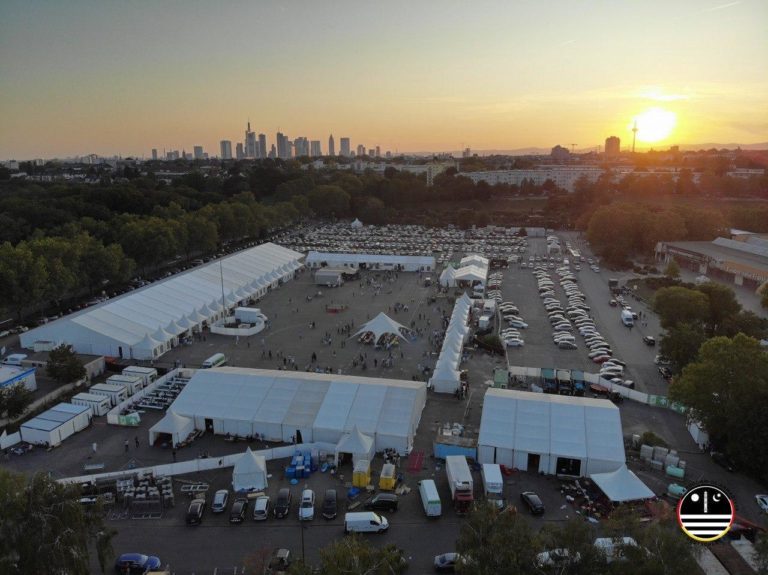
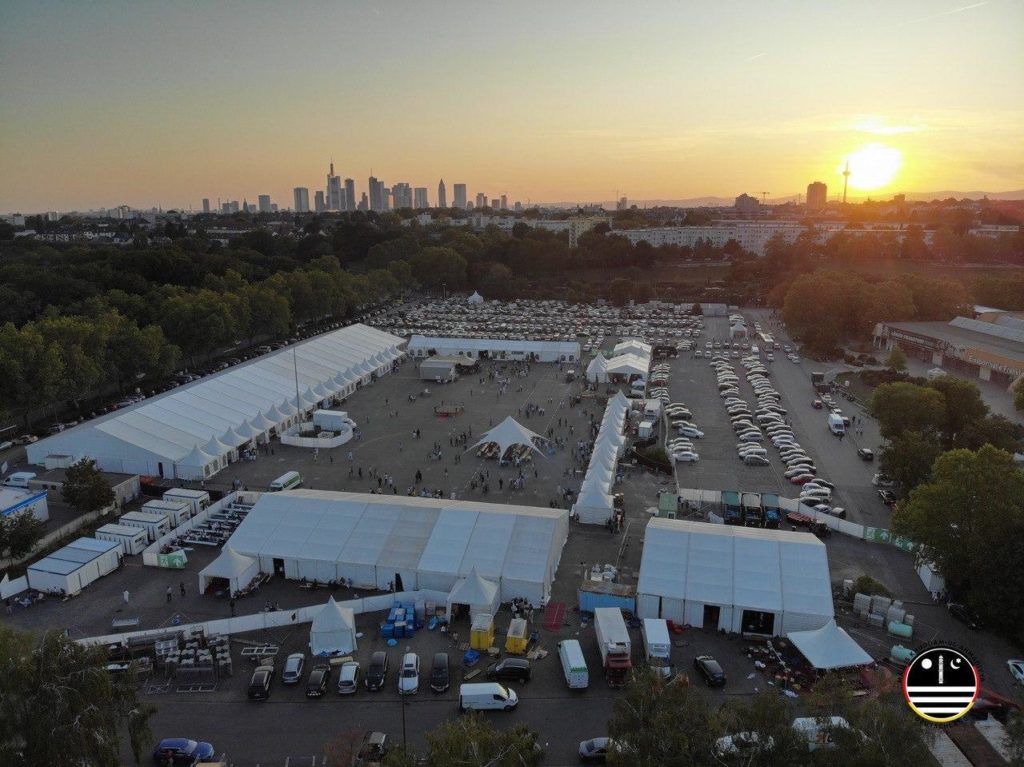
This year’s Ijtema of Majlis Khuddamul-Ahmadiyya Germany was held in Frankfurt from 23 to 25 August. The Ijtema took place under the theme of Salat, which was given by Hazrat Amirul Momineenaa.
Another theme was the motto “Fit for Salat” to make Khuddam physically fit and show them different aspects of fitness, so they can offer their prayers with concentration.
The preparations for the Ijtema had already begun months before. An organising committee had been formed, chaired by the Nazim-e-Ala, Attaul Haleem Ahmad Sahib. This organising committee had been eagerly working to organise the upcoming 40th annual Ijtema to make it a memorable experience for the Khuddam and Atfal brothers, with the highlight of Salat. Therefore, a total of six meetings with the Ijtema Board had taken place, as well as many meetings with the individual Nazimeen. The meeting of the entire organising committee took place in Mörfelden in the Subhan Mosque, which was also attended by Sadr Sahib Majlis Khuddam-ul-Ahmadiyya Germany.
This year, special efforts were made to ensure maximum attendance of Khuddam and Atfal at the Ijtema. For this purpose, meetings were organised in local chapters with the theme and motto of the Ijtema. An extensive advertising campaign was also carried out on social media about the importance of Salat. This campaign also showed how Khuddam offer prayers at work. In terms of content, the Ijtema was expanded with various elements to fulfill the diverse interests of Khuddam. Among the highlights were the following:
– A charity walk of 2.5 kilometres, which was held on Saturday at 11am, in which more than 175 Khuddam participated
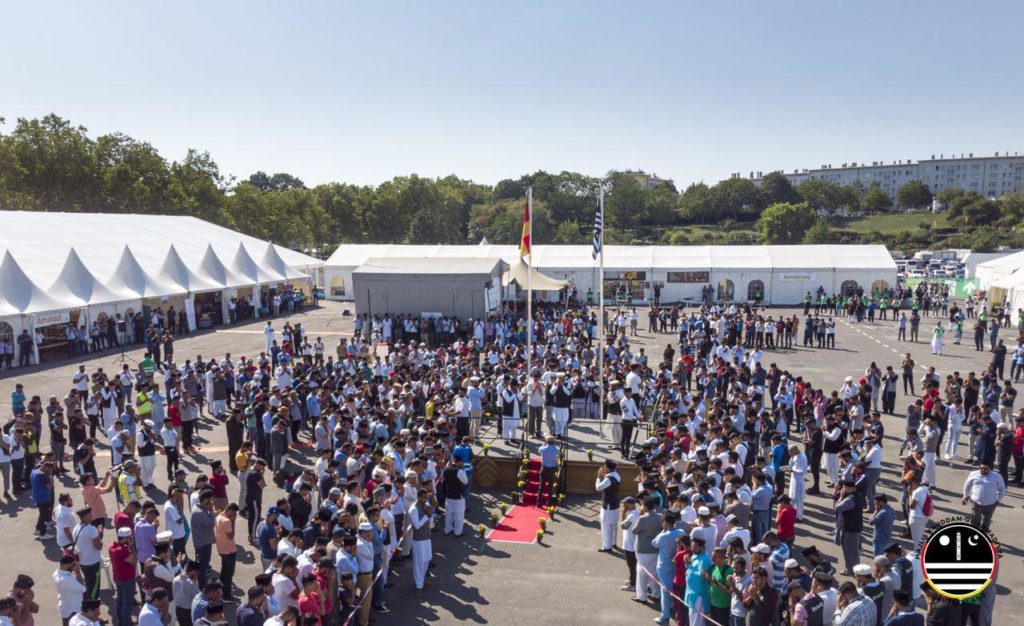
– An aerial photo campaign in which over 3,000 Khuddam shaped the flag of Khuddam-ul-Ahmadiyya and the flag of Germany
– The “Fit for Salat” challenges, which were held at the venue and attracted many Khuddam
This year, there was a “Fit for Salat” area where Khuddam could test their physical fitness to learn how to make their body and their soul fit. Different challenges related to Namaz were brought to Khuddam with the help of missionaries, for example, 40 days of continuous Tahajud prayer, accompanied by a missionary.
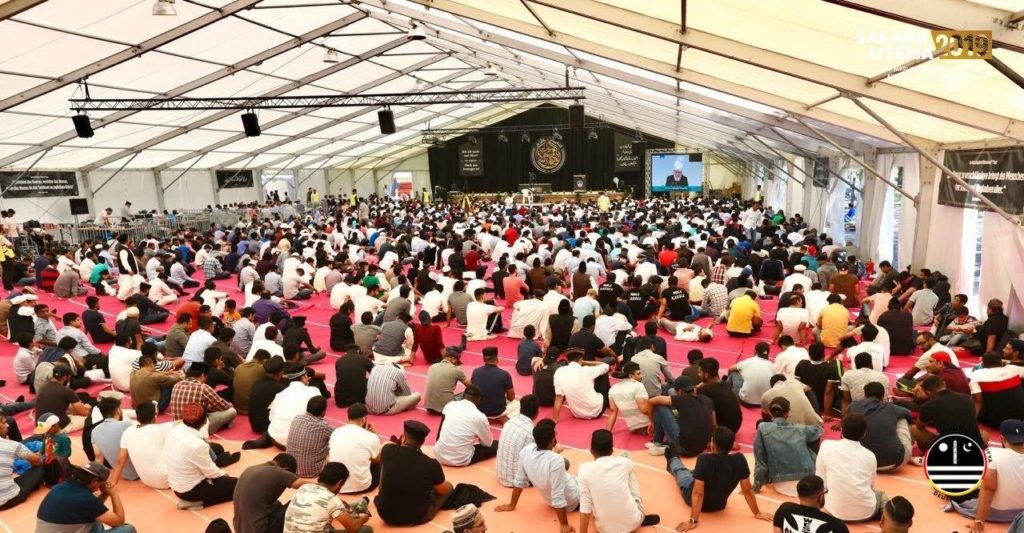
A presentation after congregational prayer on “Namaz and science” was shown to all Khuddam, showing how Namaz is beneficial for our spiritual and physical health.
This year’s feature programme dealt with the topic of how Ahmadi youth can protect themselves from harmful aspects of society and how they can develop a connection with Allah.
Another new programme this year was “Zikr-e-Ilahi” (remembrance of Allah). Half an hour before each Namaz, everything was brought to a close and Khuddam were accompanied by tarbiyat teams and missionaries to Wuzu (ablution). After, everyone would go to the main tent and approximately 15 minutes before each Namaz, they performed Zikr-e-Ilahi together, with the help of a missionary.
Furthermore, the Khuddam had the opportunity to visit an exhibition on Salat, an escape room with puzzles for prayer, a Kahoot! quiz, a poetry corner, survival coaching, Khuddam Café, Majlis Ansar Sultan-ul-Qalam stall and much more.
All programmes at this year’s Ijtema have dealt with the theme of Salat from a variety of perspectives. The highlights offered to Atfal included an educational corner with lectures about Salat and experiments, an exhibition about Salat made by Atfal, father-son competitions, an Atfal corner to mention a few.
The on-site waqar-e-amal, on the fairground in Frankfurt and at the stadium, had begun on 17 August. Many Khuddam sacrificed their time and participated in the preparations with great eagerness and zeal, Alhamdolillah! After an intensive preparatory phase on the new grounds, the inspection was held on Thursday, 22 August by Sadr Sahib Majlis Khuddam-ul-Ahmadiyya Germany, where the preparations could be reviewed, improvements could be made and advice could be sought.
On the same day, a meeting of the Ijtema Board had taken place in which final preparations could be discussed. The first day commenced with congregational Fajr prayer and breakfast, while the other days started with Tahajud prayer in congregation.
After the Jumuah prayer and the Friday Sermon of Hazrat Khalifatul Masih Vaa, the opening ceremony led by Amir Jamaat Germany was initiated with the flag hoisting.
For the Atfal, a separate opening ceremony was conducted under the direction of mohtamim Atfal in the Atfal Ijtema Gah.
Afterwards, Khuddam and Atfal headed to academic competitions, sports competitions and to other numerous attractions of the 40th MKA Ijtema.
At this year’s Ijtema, among other competitions, the following sports competitions for Khuddam took place: cricket, football, volleyball, tug-of-war, the strongman competition and other various athletics competitions.
As a special highlight, the quarter-finals of football took place in a stadium. Everyone had a chance to witness this special event. Apart from this, a friendly football match in the stadium and a tug of war between the national amila of Khuddamul-Ahmadiyya and regional qaideen was organised.
The academic competitions formed another important part of the annual Ijtema. Competitions included recitation of the Quran, speech in Urdu and German, nazm, Azan, extempore speech in Urdu and German, Hifz-e-Quran [memorisation of the Quran], a test of religious knowledge, a test of translation of the Quran, observation test, Ruhani Khazain quiz, Bait Bazi and Chinese whispers.
Both the academic and sports competitions took place on all three days of the Ijtema. In addition to the previously mentioned programme, other events were organised for Khuddam.
For example, keynote speeches on “namaz and science”, a talk on “Prayer”, and “Khilafat: Our Mash‘al-e Rah [guiding light]”, a sitting with new Khuddam from Pakistan, a Real Talk sitting on the topic of Purdah of Ahmadi Muslim boys and about how the body and soul can be made fit for Namaz.
All these events were followed and attended by the Khuddam with great interest. It is worth mentioning that not only the Khuddam present at the Ijtema could benefit from these programmes and from the spiritual atmosphere, but also many hundreds and even thousands of people had the opportunity to follow this Ijtema through social media.
The Ijtema saw a total of 8,767 visitors. Alhamdolillah, Allah the Almighty gave us the opportunity to organise a Khuddam Ijtema successfully once again.
There were hundreds of muawins, naib nazims and the entire organising committee as well as many visitors who had participated in the Ijtema by the grace of Allah.
A special thanks is due to Afsar Jalsa Salana and the Jalsa organisation, who cooperated in many areas in the preparation phase.
May Allah enable us to benefit adequately from this Ijtema, to serve Jamaat-e-Ahmadiyya in the future in the best possible way and to intensify our prayers. May Allah enable us to fulfill the expectations of our beloved Imam. Amin.
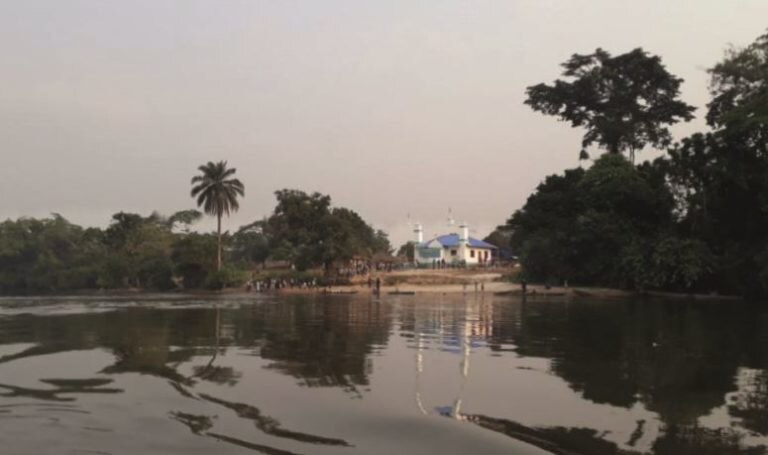
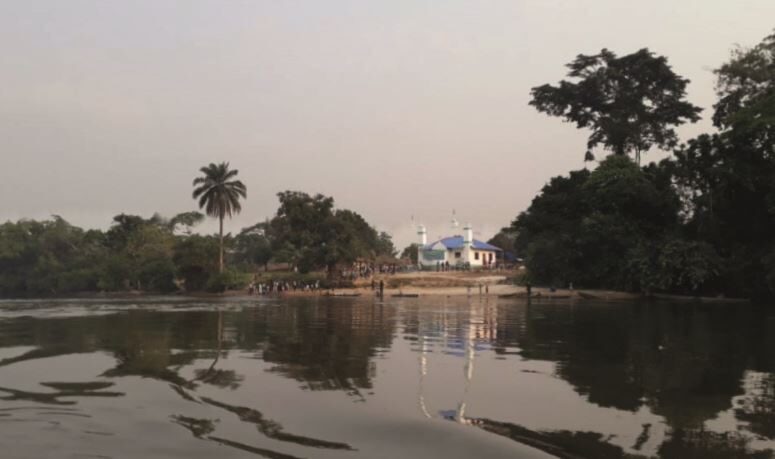
The Ahmadiyya Congo Kinshasa Jamaat constructed a beautiful mosque in the province of Kwilu, Bandundu region. This remote village is on the bank of river Kwilu, about 450 kilometers from the capital Kinshasa.
The Jamaat was established here in 2005 when the chief, Mr Umar Balesi accepted the message of the Promised Messiahas. The chief continued to spread the message of Ahmadiyyat, and in a very short period, people from about 30 more villages accepted Ahmadiyyat.
The Amir and Missionary-in-Charge of the Democratic Republic of the Congo, Khalid Mahmood Shahid Sahib visited the village of Nkansala on 26 January 2018 and offered the Friday prayer. After the prayer, Amir Sahib laid the foundation stone of the Aqsa Mosque. Construction work started on 11 March 2019. The regional missionary of the Bandundu region, Farid Ahmad Bhatti Sahib, with his team, endeavoured to complete the task of building the mosque. It was a hard task to reach the site of the mosque with all the building material because there is no land route to the site and our missionary and workers had to take boats to reach the site.
As the construction work started, Huzooraa authorised our Jamaat to buy a motorboat. This boat helped us a lot and is still very effective to contact distant Jamaats.
The enthusiasm and sentiments of Ahmadis during the construction of the mosque was worth watching. They organised many waqar-e-amal events to save a lot of money.
On 3 July 2019, the blessed day of the inauguration ceremony of the mosque commenced. A delegation of 35 members accompanied Khalid Mahmood Shahid Sahib on a boat to the site of the Aqsa Mosque.
After the recitation of the Holy Quran, a brief report was presented to the audience followed by a brief speech by Amir Sahib. The mosque was formerly inaugurated by cutting the ribbon and after that, Zuhr and Asr prayers were offered. About 500 people attended the ceremony.
A delicious lunch was also served at the end of the ceremony. Three local radio channels broadcast the news of the inauguration of a mosque by Jamaat-e-Ahmadiyya and a television channel aired a documentary spanning 45 minutes about the mosque.
I consider those Muslim clerics who oppose the acquisition of knowledge in the modern sciences to be in the wrong. For in doing so, they seek to veil their own error and weakness. Their minds are set on the fact that research in the field of modern science distances people from Islam and misguides them. They assert that reason and science are, as if, completely at odds with Islam. Since they do not possess the ability to demonstrate the flaws in philosophy themselves, in order to hide their own incapability, they have formed the notion that it is unlawful to study the modern sciences at all. Their souls tremble in the face of philosophy and submit helplessly before modern research.