
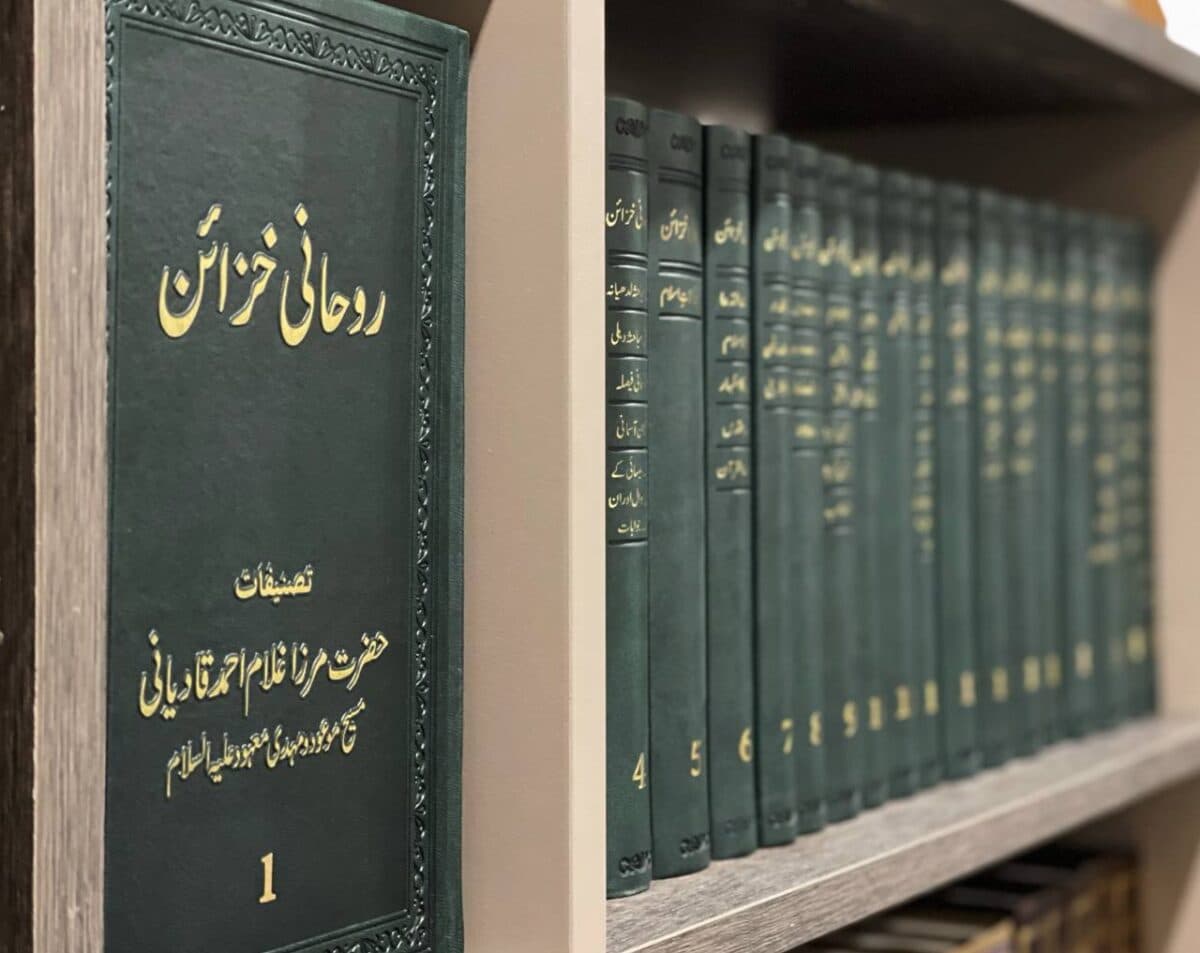
A series looking into the allegations raised against Hazrat Ahmad’sas personality, writings, revelations, and prophecies, along with the answers he has provided
Awwab Saad Hayat, Al Hakam
On 1 February 1905, the Promised Messiahas received the following revelation from Allah:
انت منّي بمنزلة ولدي
“You are to Me like My son.” (Tadkhkira, [English] p. 718)
This revelation serves to underscore the mission of the Promised Messiahas to eradicate idolatry and foster Monotheism [Tawhid]. Nonetheless, detractors of the Jamaat distort this message, falsely claiming that Mirza Sahib professed to be God’s son.
The Promised Messiahas clarified the allegorical nature of this revelation and stated:
“Allah the Almighty is Holy, without a son. This revelation is metaphorical. As in this age ignorant Christians have deified Hadrat ‘Isa because of such expressions, divine wisdom determined the use of even stronger expressions with regard to my humble self so that the eyes of the Christians should open up and should realise that there is someone in this ummah [followers of the Holy Prophetsa] for whom stronger expressions have been used than the words on the basis of which they deify ‘Isa.” (Haqiqatul-Wahi – The Philosophy of Divine Revelation, p. 111, footnote)
Further elucidating this point on another occasion, Hazrat Ahmadas stated that God is unequivocally singular, without partners or progeny. However, he highlighted that the Holy Quran employs metaphors, such as equating the Holy Prophet’ssa hand with God’s own, to convey deeper meanings:
يَدُ اللّٰهِ فَوْقَ أَيْدِيهِمْ
“The hand of Allah is over their hands.” (Surah al-Fath, Ch.48: V.11)
Similarly, God commands the Holy Prophetsa to say “يٰعِبَادِ”, i.e., “O my servants” (Surah az-Zumar, Ch.39: V.11), instead of “يا عباد اللّٰهِ”, i.e., “O Allah’s servants”. Moreover, God says, “فَاذْكُرُوا اللّٰهَ كَذِكْرِكُمْ أَبَاءَكُمْ” i.e., “And celebrate the praises of Allah as you celebrated the praises of your fathers.” (Surah al-Baqarah, Ch.2: V.201)
This allegorical speech, as seen in various Quranic instances, underscores the importance of discerning the intended implications of Divine words. Hazrat Ahmadas cautioned against literal interpretations that could lead to misconceptions. (Dafi‘ al-Bala, Ruhani Khazain, Vol. 18, p. 227)